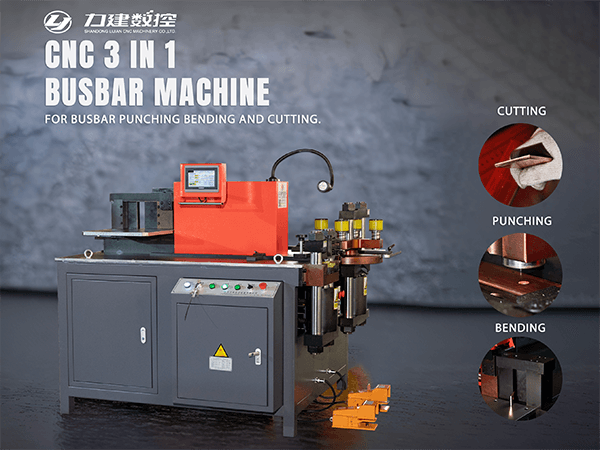
The Unique Nature of Aluminium Busbar Bending Machine
Aluminium busbar bending machines address aluminium’s specific characteristics. Aluminium is lighter and softer than copper, requiring careful handling. Consequently, bending must avoid cracking or excessive deformation. LiJian® engineers machines optimized for aluminium. Moreover, they ensure bends maintain structural and electrical integrity.
Challenges in Aluminium Bending
Aluminium can work-harden and springback more than copper. Therefore, bending processes must account for these behaviors. LiJian® machines incorporate springback compensation algorithms. Additionally, tooling is designed to minimize surface marring. This attention to detail yields perfect bends every time.
Features of Aluminium-Specific Benders
Advanced aluminium busbar bending machines include specialized features. For instance, low-pressure bending modes prevent surface damage. Additionally, polished tooling surfaces reduce friction. LiJian® uses anodized components for corrosion resistance. Furthermore, digital controls allow precise angle input for consistent results.
Precision Control Systems
Accurate bending is critical for aluminium busbars. LiJian® machines feature high-resolution encoders to monitor bend progress. Moreover, real-time adjustments compensate for material variations. Consequently, each bend matches specifications exactly. This precision is vital for applications like aerospace and automotive.
Tooling and Die Innovations
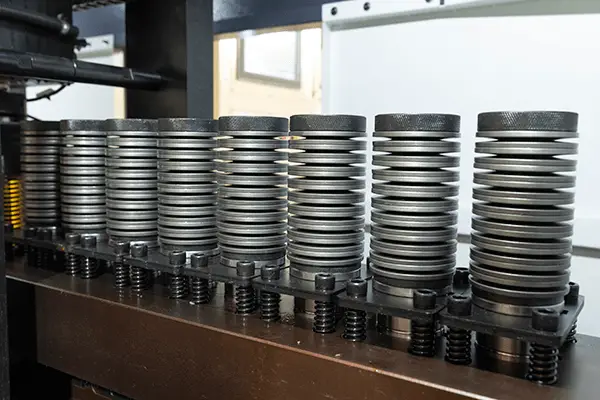
Tooling for aluminium must be smooth and durable. LiJian® employs hardened steel with specialized coatings. This reduces galling and extends tool life. Additionally, quick-change systems allow rapid adaptation to different profiles. Therefore, production flexibility increases without sacrificing quality.
Applications in Lightweight Industries
Aluminium busbar bending machines are crucial where weight savings matter. The aerospace industry uses aluminium busbars for avionics. Similarly, electric vehicles utilize them to reduce overall weight. LiJian® machines meet the high standards of these sectors.
Aerospace and Aviation
Aircraft require lightweight and reliable electrical systems. Aluminium busbars bent with precision fulfill this need. LiJian® ensures bends meet stringent aerospace tolerances. Moreover, the machines handle the alloys commonly used in aviation.
Automotive and Electric Vehicles
Electric vehicles benefit from aluminium’s light weight for extended range. Bent busbars connect batteries and motors. LiJian® machines produce these components efficiently. Furthermore, they support high-volume production required by the automotive industry.
Advantages of LiJian® Aluminium Busbar Bending Machine
LiJian® aluminium busbar bending machines offer significant benefits. Their specialized design prevents material damage. Moreover, energy-efficient drives reduce operating costs. The machines also feature user-friendly interfaces for easy operation.
Quality and Consistency
Every bent aluminium busbar exhibits uniform quality. LiJian® achieves this through controlled bending speeds and forces. Therefore, electrical conductivity remains optimal. Additionally, consistent bends simplify assembly processes.
Economic and Operational Efficiency
Reduced scrap rates due to precise bending lower material costs. LiJian® machines also boast fast cycle times. Consequently, throughput increases and per-part costs drop. These efficiencies enhance overall profitability.
Conclusion
Aluminium busbar bending machines are essential for modern lightweight applications. LiJian® combines tailored engineering with advanced controls. These machines empower industries to leverage aluminium’s advantages fully. Investing in such technology ensures superior products and operational success. Ultimately, LiJian® delivers precision bending for aluminium busbars.