Introduction: The Essence of Busbar Bending Machines
Modern industry demands impeccable precision in electrical component fabrication. Consequently, busbar bending machines emerge as indispensable tools. These specialized devices shape copper or aluminum busbars with remarkable fidelity. Indeed, they transform rigid conductors into custom configurations for diverse applications. The evolution of this technology underscores a broader shift toward automated manufacturing.
How Busbar Bending Machine Work: Precision in Motion
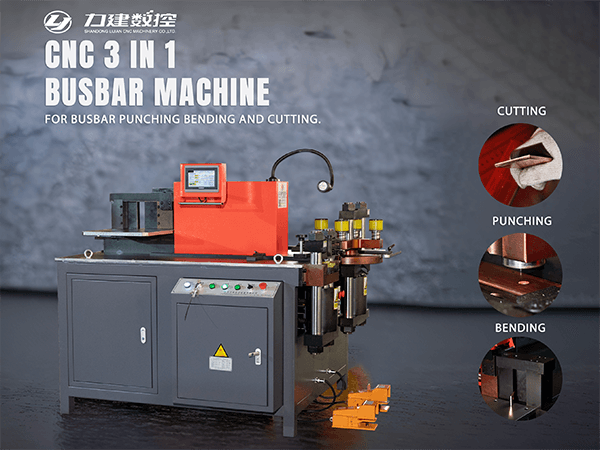
A busbar bending machine employs advanced servo motors and programmable logic controllers. First, operators input design specifications via an intuitive interface. Subsequently, the machine’s hydraulic or electric drives actuate bending arms with meticulous force. Each movement follows a pre-set algorithm, ensuring consistent angular accuracy. Moreover, sensors provide real-time feedback, correcting any deviations instantaneously. This synergy of mechanics and electronics yields flawless bends every time.
Key Advantages: Efficiency and Accuracy
These machines offer profound benefits. Primarily, they accelerate production cycles dramatically. Transitioning from manual methods to automated bending slashes labor hours. Furthermore, they enhance repeatability, eliminating human error from complex tasks. Another significant advantage is material conservation; precise bending reduces scrap waste. Therefore, manufacturers achieve higher throughput with superior quality control.
Applications Across Industries
Busbar bending machines serve multiple sectors. In renewable energy, they fabricate components for solar inverters and wind turbine switchgear. Similarly, the automotive industry utilizes them for electric vehicle battery assemblies. Additionally, data centers rely on these machines for uninterrupted power supply systems. Their versatility also extends to industrial machinery and railway electrification. Hence, their impact permeates critical infrastructure worldwide.
Conclusion: The Future of Fabrication
Innovation in busbar bending technology continues unabated. Emerging trends include integration with artificial intelligence for predictive maintenance. Consequently, these machines will become even more autonomous and adaptive. Ultimately, they epitomize the fusion of engineering excellence and practical utility. The trajectory points toward smarter, more connected manufacturing ecosystems. Indeed, embracing this technology is not merely an option but a necessity for progressive industries.