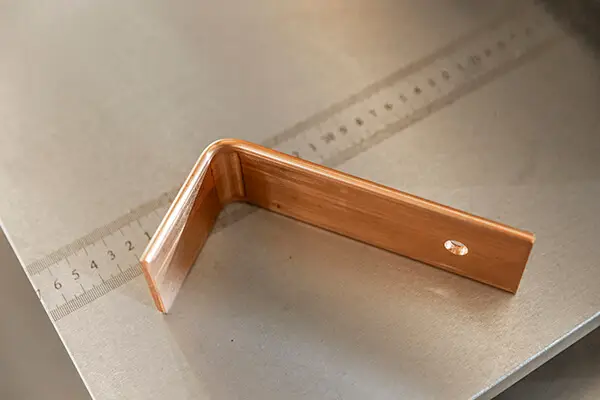
Copper busbars serve as the backbone of modern electrical distribution systems. However, precise bending determines whether a busbar fits perfectly inside switchgear or creates costly installation issues. Therefore, engineers and fabricators must understand copper busbar bending calculation before production begins. Accurate calculation improves efficiency, reduces waste, and ensures consistent electrical performance.
Manufacturers such as Shandong Lijian CNC Machinery Co., Ltd., the company behind the LiJian® busbar machine brand, design advanced equipment that simplifies these calculations while delivering highly accurate bends.
Understanding Copper Busbar Bending Fundamentals
Copper busbars behave differently from sheet metal during bending. Because busbars are thicker and wider, material deformation becomes more pronounced. As a result, fabricators must consider several factors before calculating the bend.
Key factors include:
- Busbar thickness (T)
- Bending radius (R)
- Bending angle
- Material ductility
- Springback effect
Copper, especially electrolytic tough pitch copper (ETP), offers excellent conductivity and ductility. Nevertheless, when bending occurs, the outer surface stretches while the inner surface compresses. Between these zones lies the neutral axis, where the material length remains unchanged.
Consequently, accurate bending calculation always focuses on the neutral axis position.
Core Formula for Busbar Bending Calculation
To determine the correct bending length, fabricators commonly calculate the bend allowance (BA). This value represents the material length required to form the bend.
The standard formula is:
BA = (π × (R + K × T) × A) / 180
Where:
- BA = Bend Allowance
- R = Inside bend radius
- T = Busbar thickness
- A = Bend angle (degrees)
- K = Neutral axis factor (typically 0.3–0.5 for copper)
For example:
- Thickness: 10 mm
- Bend radius: 15 mm
- Bend angle: 90°
- K-factor: 0.4
Calculation:
BA = (3.1416 × (15 + 0.4×10) × 90) / 180
BA ≈ 29.8 mm
Therefore, the bending section requires approximately 29.8 mm of material length.
Accurate machines from LiJian® busbar machine automatically calculate these parameters, which significantly reduces manual errors.
Practical Factors That Affect Busbar Bending Accuracy
Although formulas provide a theoretical value, real-world production introduces additional variables. Skilled technicians always adjust calculations based on practical conditions.
1. Minimum Bending Radius
Copper busbars usually follow this guideline:
- R ≥ T for safe bending
A smaller radius may cause cracks or structural weakening.
2. Springback Compensation
Copper slightly rebounds after bending. Operators often add 1°–3° compensation to reach the desired angle.
3. Tooling and Machine Precision
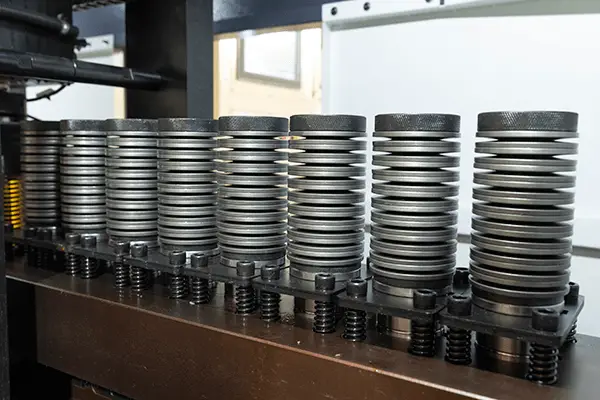
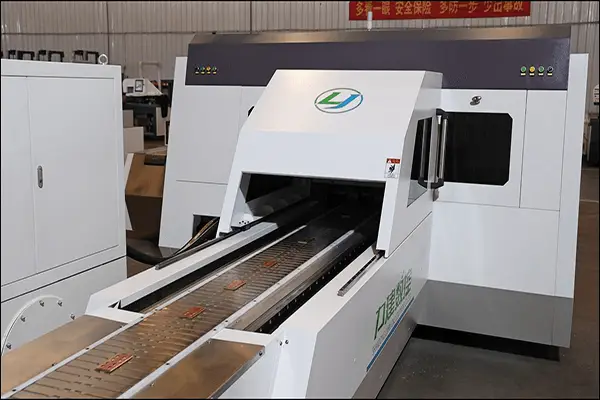
High-quality CNC busbar processing machines dramatically improve repeatability. Modern systems integrate punching, cutting, and bending into one production workflow.
For instance, equipment from Shandong Lijian CNC Machinery Co., Ltd. offers CNC control, precise servo positioning, and automatic bending calculations. These features accelerate production while maintaining tight tolerances.
4. Material Hardness
Half-hard copper requires more force and slightly larger bend radii compared with annealed copper.
Improving Efficiency with CNC Busbar Bending Technology
Manual bending methods often lead to inconsistent results. In contrast, CNC busbar machines transform the entire workflow.
Modern systems provide several advantages:
- Automatic bending calculations
- Digital angle control
- High repeatability
- Reduced material waste
- Faster production cycles
As a result, electrical equipment manufacturers can produce complex busbar geometries quickly and reliably.
Leading manufacturers such as LiJian® busbar machine integrate punching, cutting, and bending into a single machine platform. This integration streamlines busbar fabrication and dramatically improves productivity.
Conclusion
Copper busbar bending calculation plays a critical role in electrical manufacturing. Accurate formulas, combined with practical adjustments for radius, springback, and material characteristics, ensure precise results.
However, calculation alone cannot guarantee efficiency. Advanced CNC equipment simplifies the entire process, reduces human error, and delivers repeatable precision.
For manufacturers seeking higher productivity and reliability, modern busbar processing technology provides a decisive advantage.