Why Switchgear Production Demands Higher Busbar Accuracy
Switchgear builders work in tight spaces and under strict tolerances. Every busbar must align perfectly with breakers, terminals, and insulation supports. Even a small deviation in hole position or bend angle slows assembly and risks electrical instability. Therefore, manufacturers now rely on advanced equipment instead of manual tools.
Moreover, modern switchgear designs grow more compact and more complex. As layouts become denser, busbars must follow exact paths inside enclosures. This requirement pushes workshops to adopt specialized machines that guarantee repeatable precision.
The Critical Role of Busbars Inside Switchgear Systems
Busbars distribute current across the entire switchgear structure. They also manage heat dissipation and ensure stable conductivity between components. Because of this, fabricators must produce busbars with smooth edges, accurate holes, and precise bends.
In addition, correct geometry improves installation speed. Workers can mount parts quickly when dimensions remain consistent. Consequently, production flows faster and rework almost disappears.
How a Switchgear Busbar Machine Transforms Fabrication
From Manual Processing to Automated Precision
Traditionally, workers measured, cut, drilled, and bent busbars by hand. However, this method introduced inconsistency and wasted material. Today, a switchgear busbar machine replaces guesswork with digital control and hydraulic power.
As a result, workshops achieve uniform results across every batch. Operators no longer struggle with alignment or measurement errors. Instead, they focus on setup and supervision.
Three Core Functions in One Workflow
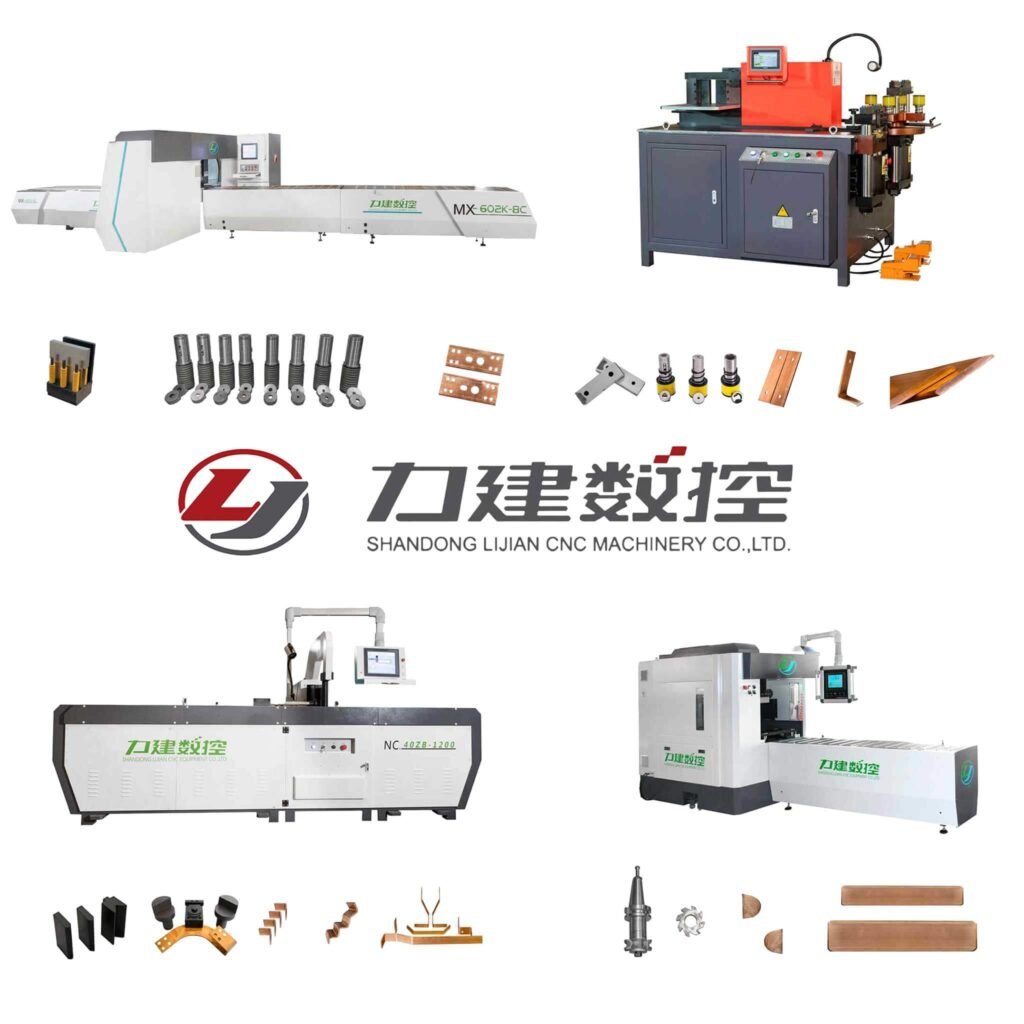
A professional machine completes three essential tasks:
Punching with Exact Positioning
The punching unit creates mounting holes with high positional accuracy. Operators set coordinates through a control system, and the machine executes the pattern precisely. Therefore, holes always match the switchgear design drawing.
Bending with Consistent Angles
The bending unit forms busbars to exact angles without damaging the material structure. This consistency allows busbars to fit into narrow switchgear compartments effortlessly.
Cutting with Clean Edges
The cutting system produces smooth, burr-free edges. Because of this, workers spend less time on secondary finishing, and assembly becomes safer and faster.
CNC Control and Intelligent Operation
Digital Input Reduces Setup Time
CNC technology allows operators to input dimensions directly into the control panel. Programs store frequently used designs, so the machine can repeat tasks instantly. Consequently, production speed increases while human error decreases.
Tooling Flexibility for Various Busbar Sizes
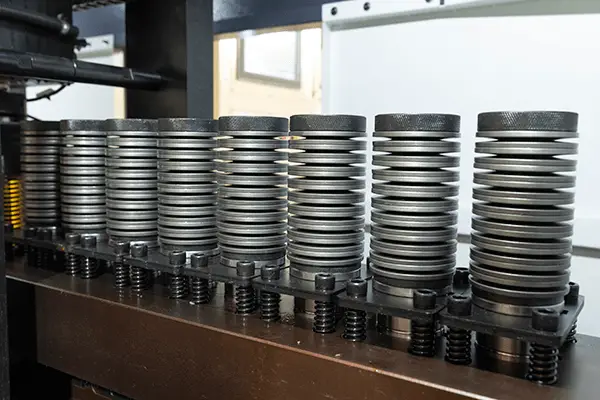
Switchgear workshops often process different widths and thicknesses. Interchangeable tooling lets one machine handle all these variations. This flexibility eliminates the need for multiple separate devices.
Compatibility with Copper and Aluminum
Manufacturers use both copper and aluminum in switchgear applications. A high-quality machine adapts easily to both materials and maintains the same processing accuracy. Thus, workshops can switch materials without changing equipment.
Productivity Gains for Switchgear Manufacturers
Faster Throughput with Fewer Operators
Automation reduces manual labor significantly. One operator can manage the entire process. Meanwhile, the machine performs punching, bending, and cutting in a continuous sequence.
Reduced Material Waste and Lower Costs
Precise cutting and punching minimize scrap. Over time, this reduction in waste leads to noticeable cost savings. Furthermore, consistent accuracy prevents rejected parts and rework.
Improved Safety in Daily Operation
Modern machines include protective guards, emergency stop systems, and stable clamping structures. These features protect operators while maintaining smooth production.
Integrating Busbar Machines into the Switchgear Workflow
Direct Connection Between Design and Production
Design drawings can translate directly into machine parameters. This connection shortens the path from engineering to fabrication. As a result, production teams respond faster to design changes.
Long Service Life with Simple Maintenance
A robust structure and modular components simplify maintenance routines. Regular care keeps the machine accurate for many years, which protects the investment.
Why LiJian® Busbar Machine Fits Switchgear Workshops Perfectly
Compact Design with 3-in-1 Capability
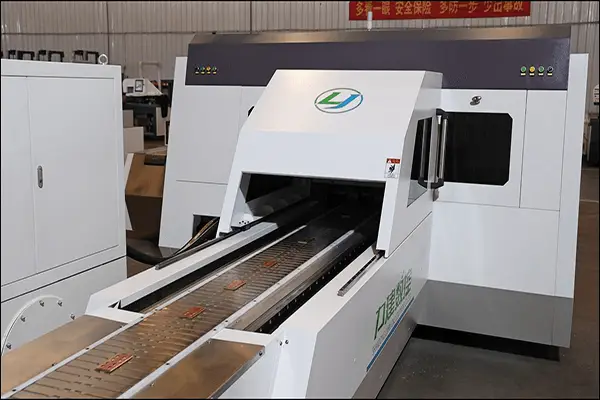
LiJian® busbar machine integrates punching, bending, and cutting into one compact platform. Therefore, workshops save space and improve workflow continuity.
High Precision for Tight Switchgear Tolerances
LiJian® equipment delivers consistent dimensional accuracy that matches strict switchgear standards. Every hole, bend, and cut follows the programmed value.
Reliable Performance for Continuous Production
Switchgear factories often run long production cycles. LiJian® machines handle heavy workloads without sacrificing stability or speed.
Choosing the Right Machine for Switchgear Busbar Processing
Key Factors to Consider
When selecting equipment, manufacturers should evaluate:
- Maximum busbar size capacity
- CNC automation level
- Tooling options
- Safety features
- Future production requirements
Ignoring these factors often leads to limitations later.
Common Mistakes During Selection
Some buyers focus only on price. Others overlook expansion needs. However, a well-chosen machine supports growth and improves long-term efficiency.
The Future of Busbar Processing in Switchgear Manufacturing
Automation, digital control, and integrated systems will continue to shape busbar fabrication. Workshops that adopt advanced machines today gain a strong competitive advantage tomorrow.
Conclusion
A switchgear busbar machine no longer serves as optional equipment. It acts as a core production asset that ensures accuracy, speed, and safety. With intelligent control, versatile tooling, and integrated functions, the LiJian® busbar machine helps switchgear manufacturers produce high-quality busbars efficiently while reducing costs and labor effort.