Why Accurate Bending Matters in Busbar Fabrication
Geometry Directly Affects Electrical Performance
Busbars carry large currents through switchgear, panels, and transformer systems. Therefore, their shape must match strict design drawings. Even a small angle deviation can create installation problems and mechanical stress.
A busbar bender forms copper and aluminum bars with exact angles and smooth radii. As a result, installers achieve perfect alignment, and electrical systems operate more reliably.
Moreover, modern panel designs require compact layouts and complex routing. Manual tools cannot meet these precision demands consistently. Consequently, manufacturers rely on automated bending equipment.
Manual Methods Often Lead to Hidden Defects
Workers using traditional tools frequently produce uneven bends and surface damage. These issues slow down assembly and increase the risk of overheating during operation.
In contrast, a professional busbar bender applies stable pressure and firm clamping. The material deforms smoothly, and the structure remains intact. Thus, manufacturers reduce rework and improve product quality.
How a Busbar Bender Improves Production Efficiency
Controlled Force Protects the Material
A busbar bender uses hydraulic or servo systems to guide the bending process. Instead of sudden force, the machine applies gradual and even pressure. This approach protects copper and aluminum from cracking or distortion.
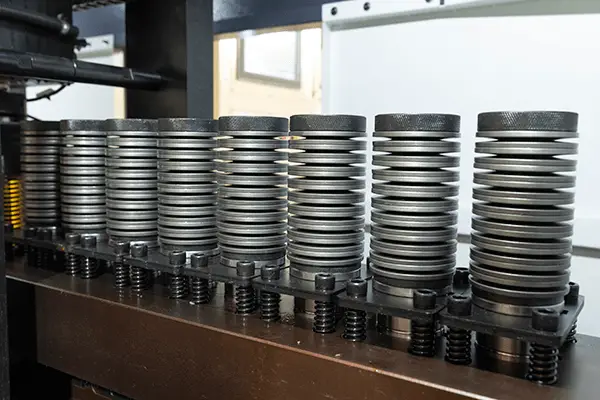
At the same time, adjustable dies allow operators to handle different busbar sizes easily. Setup becomes faster, and workflow becomes smoother.
CNC Control Ensures Repeatability
Modern busbar benders include CNC and digital control panels. Operators input the required angle once, and the machine repeats it accurately every time. Furthermore, the system compensates for thickness automatically.
Because of this consistency, factories maintain uniform quality across shifts and batches.
Applications Across Electrical Manufacturing Industries
Faster Workflow in Panel and Switchgear Production
Time efficiency determines competitiveness in electrical manufacturing. A busbar bender completes each bending operation within seconds. Operators place the bar, select the program, and start the process.
Consequently, production speed increases while human error decreases.
Suitable for Multiple Industrial Sectors
This equipment supports production in:
- High and low voltage switchgear
- Transformer manufacturing
- Power distribution cabinets
- Renewable energy systems
- Rail transit electrical assemblies
As demand grows in these industries, reliable bending equipment becomes increasingly important.
Safety and Ergonomics in the Workshop
Reduced Physical Effort for Operators
Bending thick copper bars manually requires significant strength and exposes workers to injury. A busbar bender removes this physical strain and replaces it with simple machine operation.
In addition, stable fixtures prevent slipping and improve workplace safety.
Cleaner and More Organized Production Environment
Automated bending reduces manual tools and clutter on the workshop floor. Therefore, factories achieve a more professional and efficient production layout.
Integration with Complete Busbar Processing Lines
Seamless Connection with Cutting and Punching Machines
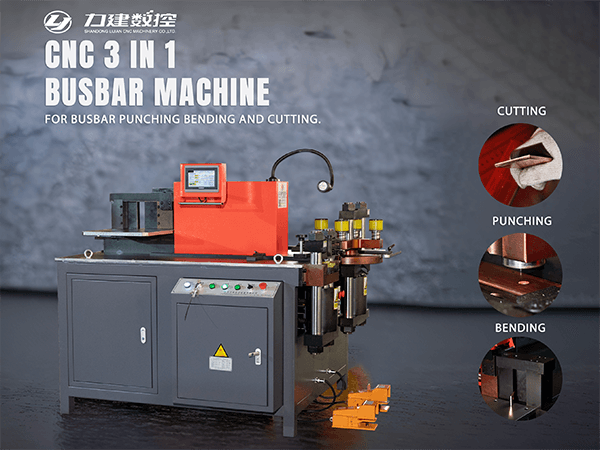
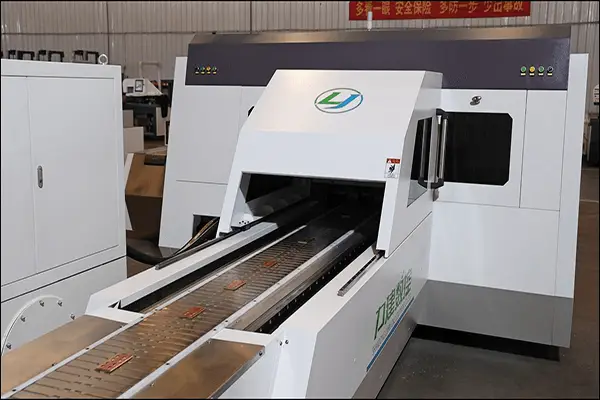
Manufacturers now prefer integrated busbar processing systems. A busbar bender connects smoothly with punching and cutting machines to create a continuous workflow.
Raw material enters one side of the line, and finished busbars exit from the other side. This process saves time and improves coordination.
Support for Complex Busbar Designs
Modern electrical panels often require multi-angle and offset bends. A busbar bender handles these shapes accurately and consistently. As a result, engineers gain more flexibility in design.
Why Choose LiJian® Busbar Bender
Designed for Modern Electrical Manufacturers
LiJian® busbar machine designs bending equipment specifically for switchgear, transformer, and panel builders. The machines combine precision engineering, CNC control, and durable construction to meet industrial requirements.
Furthermore, operators can learn the system quickly and maintain it easily.
A Key Tool for Efficient Busbar Production
A busbar bender plays a fundamental role in modern busbar fabrication. It improves accuracy, increases speed, and enhances safety. For manufacturers who seek higher efficiency and consistent quality, LiJian® busbar machines provide a reliable solution.