Why Precision Bending Matters in Busbar Fabrication
Accuracy Defines Electrical Reliability
Every switchgear cabinet, distribution panel, and transformer system depends on well-formed busbars. These conductors must fit perfectly, align correctly, and carry high current without stress concentration. Therefore, precision during bending directly affects final assembly quality.
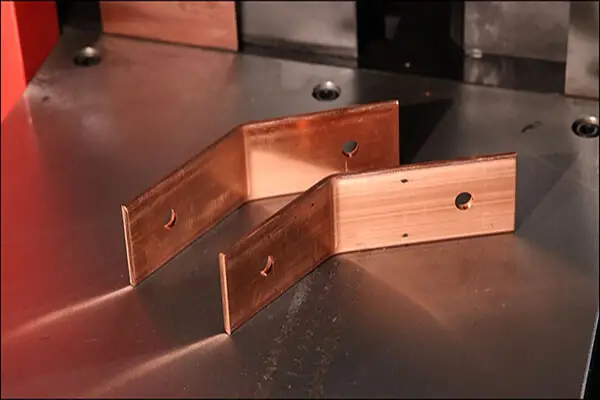
A busbar bending machine shapes copper and aluminum bars into exact angles without damaging the material structure. Clean bends, consistent radii, and repeatable geometry simplify installation and improve electrical performance.
Moreover, modern electrical panels demand compact layouts. Manufacturers cannot rely on manual tools when tolerances become tighter each year. As a result, automated bending technology becomes essential in busbar production.
Manual Bending Creates Hidden Problems
Manual bending often causes uneven angles, surface cracks, and dimensional deviation. These small errors lead to installation delays, alignment issues, and overheating risks during operation.
In contrast, a professional bending machine applies controlled force, ensuring smooth deformation while preserving conductivity. Consequently, manufacturers reduce rework, material waste, and production delays.
How a Busbar Bending Machine Works
Controlled Force and Material Protection
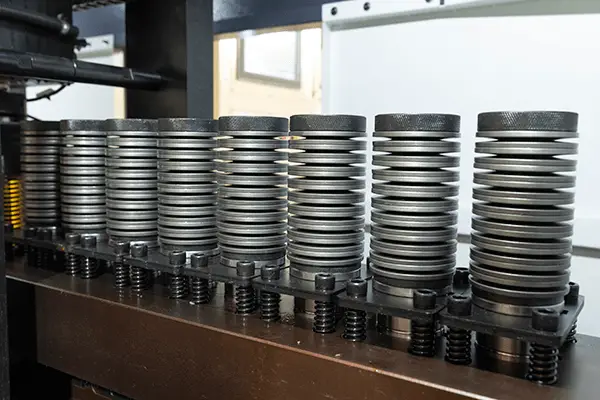
A busbar bending machine distributes pressure evenly across the bending area. Instead of sudden mechanical force, hydraulic or servo systems guide the metal gradually into shape. This process protects both copper and aluminum from structural damage.
At the same time, adjustable dies and pressure settings allow operators to handle different thicknesses and widths with confidence. The machine adapts to the material, not the other way around.
CNC Technology Improves Repeatability
Modern machines integrate CNC control systems. Operators enter the bending angle once, and the system repeats it with mathematical precision. Furthermore, digital displays remove guesswork and improve workflow consistency.
CNC control offers several advantages:
- Angle memory storage
- Automatic thickness compensation
- Faster setup time
- Reduced operator dependency
Because of this, factories maintain uniform quality across batches and shifts.
Productivity Advantages in Panel Manufacturing
Faster Workflow, Higher Output
Time plays a critical role in switchgear and transformer manufacturing. Traditional bending consumes labor hours and slows assembly lines. However, a busbar bending machine completes each bend within seconds.
Operators simply position the busbar, select the program, and start the cycle. Consequently, production speed increases while human error decreases.
Ideal for Multiple Electrical Industries
This efficiency supports various industries, including:
- High and low voltage switchgear
- Transformer manufacturing
- Power distribution cabinets
- Renewable energy systems
- Rail transit electrical systems
As demand grows in these sectors, manufacturers need faster and more reliable busbar processing equipment.
Safety and Ergonomics in the Workshop
Reduced Physical Strain on Workers
Thick copper bars require significant force to bend manually. This process exposes workers to fatigue and injuries. A busbar bending machine eliminates heavy physical effort and replaces it with controlled operation.
Protective clamping systems and stable fixtures also prevent accidental slipping. Therefore, the workshop becomes safer and more organized.
Cleaner and More Professional Production Environment
Automated bending reduces noise, clutter, and manual tools on the floor. As a result, factories achieve a cleaner layout and more professional production flow.
Integration with Complete Busbar Processing Lines
Seamless Connection with Cutting and Punching Machines
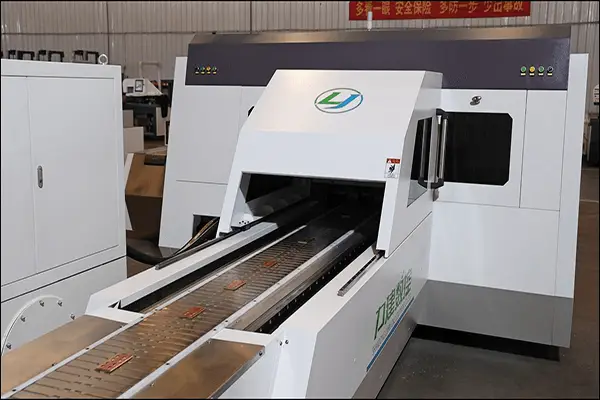
Today, manufacturers prefer integrated busbar processing lines instead of separate machines. A bending machine connects smoothly with CNC punching and cutting equipment, creating a continuous workflow.
Raw material enters one side of the line. Finished busbars exit the other side. This streamlined process saves time and improves coordination between operations.
Supports Complex Busbar Designs
Modern electrical panels require multi-angle and offset bends to maximize space. A busbar bending machine handles these complex shapes easily and consistently.
Because of this precision, engineers gain more freedom in panel design.
Cost Efficiency and Material Preservation
Minimized Scrap and Rework
Copper remains expensive. Any bending error leads to direct financial loss. Machine bending ensures first-time accuracy and reduces scrap significantly.
In addition, proper bending preserves the cross-sectional area of the busbar, which maintains electrical conductivity and long-term durability.
Why Choose LiJian® Busbar Bending Machine
Built for Modern Electrical Manufacturers
LiJian® busbar machine designs bending equipment specifically for switchgear, transformer, and panel builders. The machines combine precision engineering, CNC control, and durable construction to meet industrial demands.
Furthermore, LiJian® focuses on user-friendly operation, reliable performance, and easy maintenance. Manufacturers can increase output without increasing labor intensity.
A Foundational Tool for Busbar Production
A busbar bending machine no longer serves as optional equipment. Instead, it forms the foundation of efficient busbar fabrication. With higher accuracy, improved safety, and faster production, manufacturers stay competitive in a demanding electrical market.
For companies seeking precision, speed, and consistency, LiJian® busbar bending machines provide the ideal solution.