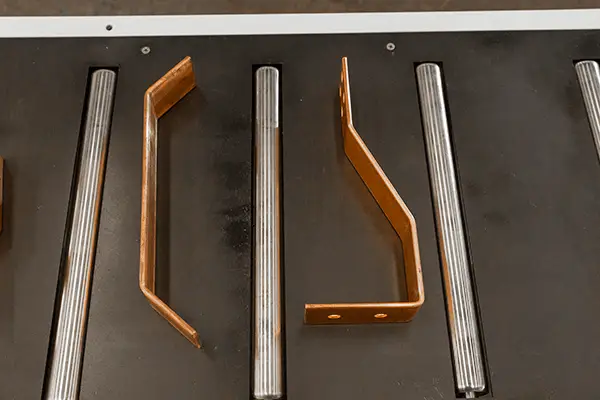
Copper busbars play a vital role in modern power distribution systems. Engineers use them widely in switchgear, transformers, and power cabinets because copper provides excellent conductivity and reliable mechanical strength. However, accurate bending determines whether the busbar fits perfectly during installation. Therefore, understanding the copper busbar bending calculation method helps manufacturers improve precision, reduce material waste, and enhance production efficiency.
Moreover, advanced processing equipment significantly improves bending accuracy. Many electrical equipment manufacturers now rely on CNC technology to achieve stable and repeatable results.
Key Principles of Copper Busbar Bending Calculation
Copper offers strong ductility, which allows manufacturers to form busbars without cracking. However, bending still creates mechanical stress inside the material. When a copper busbar bends, the inner layer compresses while the outer layer stretches. Between these two zones lies the neutral axis, where the material length remains constant.
Because of this physical behavior, engineers must calculate bending allowance carefully. Otherwise, dimensional errors may occur during fabrication.
Busbar Thickness
Thickness strongly influences bending force and bending radius. Thicker busbars require greater pressure during the bending process. Therefore, engineers usually increase the bending radius when thickness grows.
Inside Bend Radius
The inside bend radius determines how sharply the copper busbar curves. In practical electrical manufacturing, engineers commonly follow a simple guideline:
Minimum Bend Radius ≈ Busbar Thickness
For example, a 10 mm thick copper busbar generally uses a bending radius of about 10 mm. This ratio protects the copper structure and reduces the risk of cracking.
Bend Angle
The bend angle defines the final geometry of the busbar. Common production angles include 30°, 45°, and 90°. However, copper slightly rebounds after bending. As a result, operators usually add a small compensation angle during production.
Copper Busbar Bend Allowance Calculation Formula
Engineers calculate bend allowance before cutting or forming the busbar. This value determines the material length consumed during bending.
The standard formula is:
BA = (π / 180) × A × (R + K × T)
Where:
- BA = Bend Allowance
- A = Bend Angle
- R = Inside Bend Radius
- T = Busbar Thickness
- K = Neutral Axis Factor (typically 0.3–0.5 for copper)
Example Calculation
Consider the following parameters:
- Busbar thickness: 10 mm
- Bend radius: 10 mm
- Bend angle: 90°
- K-factor: 0.4
Calculation result:
BA ≈ 21.99 mm
This value represents the material length required for the curved section. Designers must include this allowance when calculating the total flat length of the busbar.
Improving Bending Accuracy with CNC Busbar Machines
Manual bending often leads to inconsistent results, especially when processing thick copper busbars. Therefore, many manufacturers adopt CNC busbar machines to improve precision and productivity.
Higher Bending Precision
CNC systems control bending angle, pressure, and positioning digitally. Consequently, manufacturers achieve stable accuracy in large production batches.
Faster Production Efficiency
Programmable bending sequences reduce setup time and simplify operation. As a result, production capacity increases significantly.
Integrated Busbar Processing
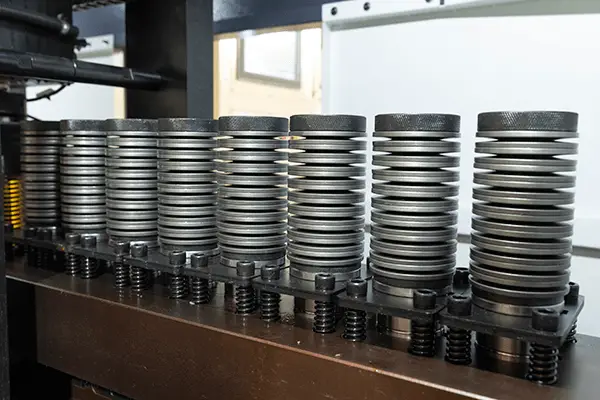
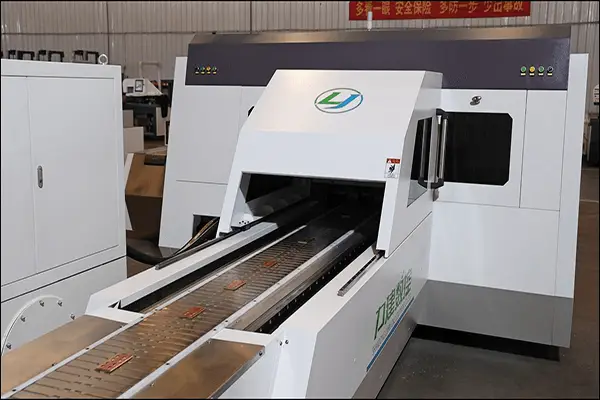
Modern equipment integrates punching, cutting, and bending functions in one system. This integration improves workflow efficiency and reduces handling time.
Manufacturers such as LiJian® busbar machine provide advanced CNC busbar processing equipment designed for copper and aluminum busbars. Detailed machine information and technical solutions are available at www.lijianbusbarmachine.com.
Conclusion
The copper busbar bending calculation method plays a critical role in electrical busbar fabrication. Engineers must consider thickness, bending radius, bend angle, and neutral axis position when designing busbars. Accurate calculations ensure precise dimensions and reliable installation.
Furthermore, CNC busbar processing machines greatly improve bending accuracy and production efficiency. By combining precise calculations with advanced manufacturing technology, electrical equipment manufacturers can produce high-quality copper busbars that meet strict industry standards.