Copper busbars play a crucial role in power distribution systems. Engineers use them in switchgear, transformers, and control panels because copper provides excellent electrical conductivity and strong mechanical performance. However, precise bending determines whether a busbar fits correctly during installation. Therefore, accurate copper busbar bending calculation helps manufacturers reduce errors, save material, and improve production efficiency.
Modern fabrication facilities increasingly rely on CNC technology. With advanced equipment, manufacturers can achieve consistent bending angles and repeatable results. Companies such as LiJian® busbar machine (www.lijianbusbarmachine.com) focus on improving precision and automation in busbar processing.
Understanding the Basics of Copper Busbar Bending
Copper offers high ductility, which allows fabricators to bend it without cracking. Nevertheless, the material still experiences stress during the bending process. When a busbar bends, the inner side compresses while the outer side stretches. Between these zones lies the neutral axis, where the material length remains unchanged.
Because of this mechanical behavior, engineers must calculate the bending allowance carefully. Otherwise, the finished busbar may not match the required dimensions.
Several key factors influence bending accuracy:
Busbar Thickness
Thickness directly affects bending force and minimum bending radius. Thicker copper busbars require higher pressure and stronger tooling. Consequently, engineers often increase the bending radius when the thickness grows.
Bend Radius
The internal bend radius determines how sharply the busbar curves. In most electrical fabrication projects, engineers follow a simple rule:
Minimum Bend Radius ≈ Busbar Thickness
For instance, a 10 mm thick copper busbar usually requires a bending radius of about 10 mm. This ratio protects the material structure and reduces the risk of cracks.
Bend Angle
The bend angle defines the final geometry of the busbar. Typical production angles include 30°, 45°, 90°, and 135°. However, copper naturally rebounds after bending. Therefore, operators slightly increase the bending angle to compensate for springback.
Copper Busbar Bending Calculation Formula
Engineers typically calculate bend allowance before cutting or forming the busbar. The commonly used formula is:
BA = (π / 180) × A × (R + K × T)
Where:
- BA = Bend Allowance
- A = Bend Angle
- R = Inside Bend Radius
- T = Busbar Thickness
- K = Neutral Axis Factor (usually 0.3–0.5 for copper)
Example Calculation
Consider the following parameters:
- Thickness: 10 mm
- Bend radius: 10 mm
- Bend angle: 90°
- K-factor: 0.4
Calculation result:
BA ≈ 21.99 mm
This value represents the material length consumed during bending. Designers must include this allowance when determining the total flat length of the busbar.
Improving Accuracy with CNC Busbar Bending Machines
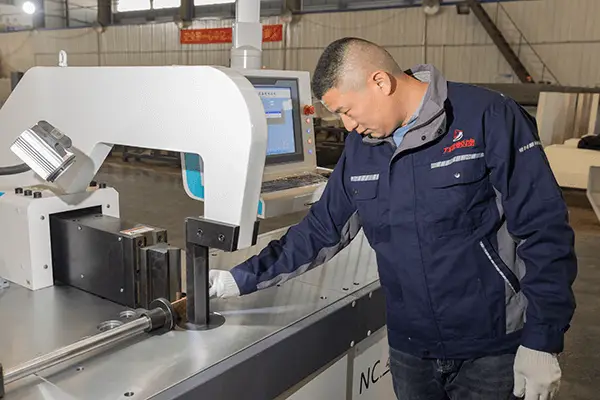
Manual bending often produces inconsistent results, especially when processing thick copper bars. Therefore, many manufacturers adopt CNC busbar bending machines to improve precision and productivity.
Advanced CNC equipment offers several advantages:
Higher Bending Precision
CNC systems control angle, pressure, and positioning digitally. As a result, manufacturers achieve consistent bending accuracy across large production batches.
Faster Production
Automated positioning and programmable bending sequences significantly reduce setup time. Consequently, factories can complete large orders more efficiently.
Reduced Material Waste
Precise calculations combined with automated bending reduce dimensional errors. Manufacturers therefore minimize copper waste and improve overall production efficiency.
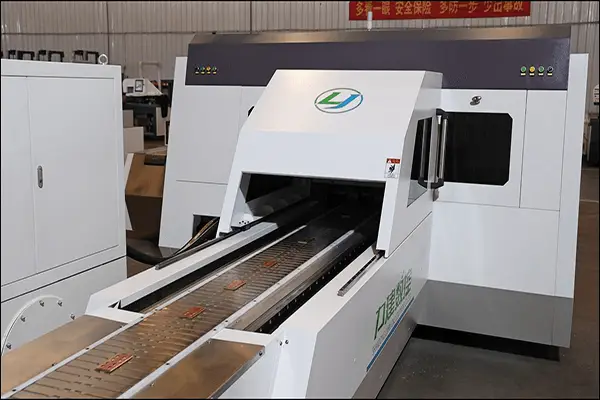
Manufacturers such as LiJian® busbar machine provide professional CNC solutions specifically designed for copper and aluminum busbar processing. These machines integrate punching, cutting, and bending functions to streamline the entire fabrication workflow.
Conclusion
Copper busbar bending calculation ensures dimensional accuracy and reliable electrical assembly. Engineers must consider thickness, bend radius, bend angle, and neutral axis position during the design stage. In addition, modern CNC bending machines greatly enhance precision and productivity.
By combining accurate calculations with advanced manufacturing technology, electrical equipment manufacturers can produce high-quality busbars that meet strict industrial standards.