Introduction to Copper Busbar Bending
Copper busbars form the conductive framework of switchgear, panels, and distribution systems. Therefore, accurate bending directly influences installation speed, electrical reliability, and visual order inside equipment. Clean angles save time. Precise bends prevent rework. Skilled technique preserves both conductivity and appearance.
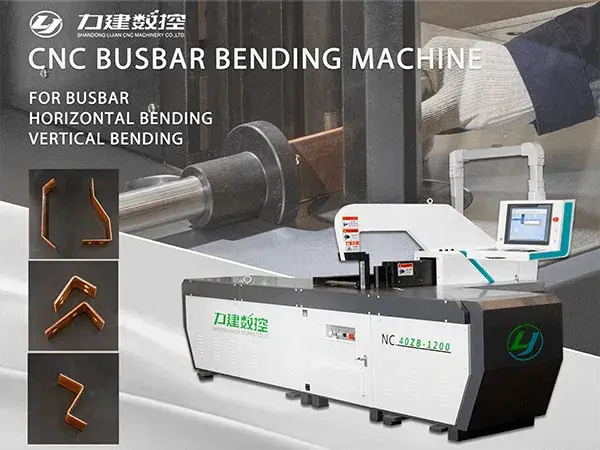
LiJian® busbar machine supports this process with stable force, accurate control, and repeatable performance. This guide explains how operators can bend copper busbars correctly through preparation, proper tooling, and disciplined execution.
Understanding Copper Before Bending
Copper Ductility and Behavior
Copper bends easily because of its excellent ductility. However, it still reacts to excessive force and extremely small radii. When operators rush the process, small cracks may appear along the outer curve. Consequently, careful control becomes essential.
Thickness and Temper Influence
Thicker busbars require more gradual pressure. Meanwhile, hard-tempered copper resists deformation more than soft copper. For this reason, operators should adjust parameters according to material condition.
Essential Tools and Equipment
Hydraulic Busbar Bending Machine
A hydraulic bending machine provides consistent pressure and accurate angle control. As a result, operators achieve repeatable bends with less effort.
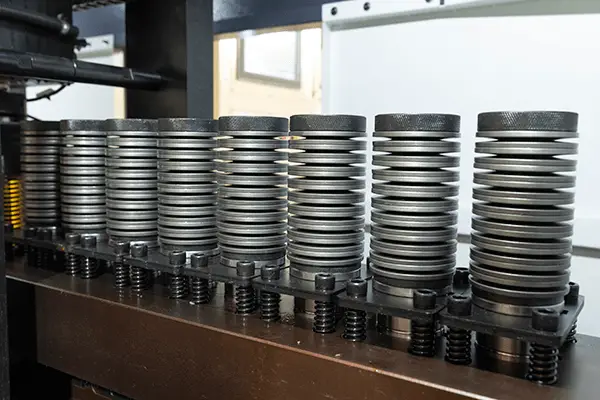
Bending Dies and Radius Blocks
Dies determine the bending radius and surface quality. Therefore, proper die selection prevents deformation and surface damage.
Measuring and Marking Tools
Angle gauges, rulers, and markers help maintain precision from start to finish. Clear markings reduce positioning errors during bending.
Preparing the Copper Busbar
Preparation determines bending quality. First, clean the copper surface to remove grease and dust. Next, mark the exact bending line clearly. Then, double-check measurements before placing the busbar into the machine. This simple routine eliminates most common mistakes.
Selecting the Correct Bending Radius
The inner bending radius should never be too small compared to the busbar thickness. Otherwise, stress will concentrate along the outer edge and create cracks.
As a practical rule, keep the inner radius at least equal to the busbar thickness. Larger radii further improve bending smoothness and safety.
Step-by-Step Bending Procedure
Step 1: Accurate Positioning
Align the marked line with the center of the bending die. Precise alignment guarantees that the angle forms in the correct location.
Step 2: Firm Clamping
Clamp the busbar tightly. Without strong clamping, the material may slide and cause inaccurate angles.
Step 3: Gradual Pressure Application
Increase pressure slowly while observing the bending progress. Controlled force prevents sudden deformation.
Step 4: Angle Formation
Stop the machine when the required angle appears. If necessary, add slight overbend to compensate for spring-back.
Step 5: Release and Inspection
Release the clamp and immediately check the angle and surface condition with measuring tools.
Managing Spring-Back Effect
Copper naturally recovers a few degrees after bending. Therefore, operators should apply slight overbend based on experience and material thickness. Testing with scrap pieces helps determine the correct compensation.
Techniques for Complex Shapes
Multiple Bends on One Busbar
Measure carefully after each bend. Small errors can accumulate and distort the final shape.
U-Shape and Z-Shape Bending
Plan the bending sequence in advance. The order of bends affects accessibility and final alignment.
Surface Protection During Bending
Keep dies smooth and clean. In addition, remove debris regularly to prevent scratches.
Common Mistakes to Avoid
- Selecting a radius that is too small
- Applying excessive pressure too quickly
- Ignoring spring-back compensation
- Misaligning the busbar with the die center
- Using worn or damaged dies
Avoiding these issues improves both quality and efficiency.
Safety Practices During Operation
Operators should always wear gloves and eye protection. Keep hands away from the bending area during operation. Moreover, check the emergency stop before starting work. Consistent safety habits protect both people and equipment.
Inspection After Bending
After bending, check:
- Angle accuracy
- Surface integrity
- Edge condition
- Dimensional correctness
Early inspection prevents defective busbars from entering assembly.
Equipment Maintenance for Consistent Results
Clean dies daily to remove copper particles. Lubricate moving parts weekly. Also, inspect the hydraulic system regularly for leaks or instability. Well-maintained equipment ensures consistent bending performance.
Best Practices for Professional Results
Plan the bending sequence before starting. Use test pieces for new thicknesses. Keep the workspace clean and organized. Record successful parameters for future reference. Gradually, these habits create reliable and repeatable results.
Conclusion
Copper busbar bending requires material knowledge, correct tooling, and careful execution. When operators control the bending radius, apply gradual force, and account for spring-back, they achieve clean and precise angles every time. With proper technique and the support of a LiJian® busbar machine, copper busbars take shape efficiently, safely, and accurately for all electrical applications.