Why Bus Bar Bending Precision Directly Affects Electrical Assembly
Electrical cabinets continue to shrink while current capacity keeps rising. Consequently, busbars must follow exact paths inside switchgear, panel boards, and transformers. A small angle error can delay installation, create mechanical stress, or reduce electrical reliability.
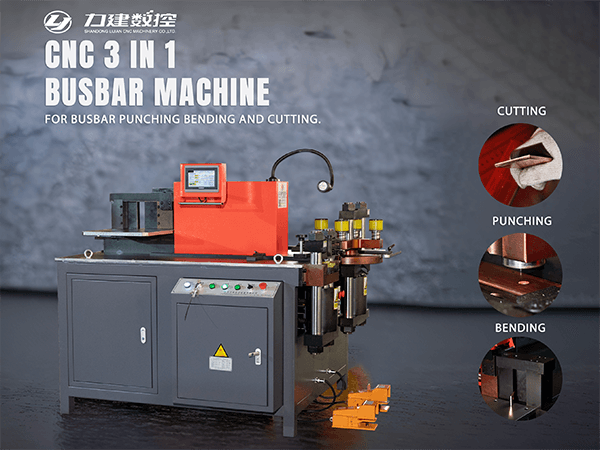
A bus bar bending machine solves this problem through controlled force and stable positioning. Operators place the copper or aluminum bar, set the angle, and complete the bend within seconds. As a result, every busbar matches the drawing without repeated correction.
Moreover, precise bending shortens installation time. Technicians no longer struggle to adjust misaligned bars inside tight enclosures. For manufacturers who value efficiency and quality, bending accuracy becomes a decisive factor.
LiJian® busbar machine focuses on delivering this level of precision for modern electrical production.
Core Functions of a Bus Bar Bending Machine
A professional bus bar bending machine offers more than simple force application. It provides accuracy, repeatability, and flexibility for different busbar sizes.
Accurate Angle Control for Consistent Results
The machine controls stroke depth and pressure to achieve exact angles. Therefore, operators do not rely on visual judgment or repeated measurement. Each bend follows the programmed value precisely.
Compatibility with Various Busbar Dimensions
Manufacturers process busbars with different widths and thicknesses. The bending system adapts quickly without complex adjustments. This flexibility reduces setup time and improves workflow.
Protection of Material Integrity During Bending
Controlled bending prevents cracks, deformation, and surface damage. Consequently, the electrical performance and mechanical strength of the busbar remain intact.
Repeatability for Batch Production
Once parameters are set, the machine repeats identical bends across large batches. This consistency proves critical in switchgear and transformer manufacturing.
Advantages Compared with Manual Bending Methods
Manual bending consumes time and depends heavily on operator experience. Workers measure repeatedly, adjust angles manually, and correct errors during installation. This process slows production and wastes material.
In contrast, a bus bar bending machine simplifies the entire task.
First, production speed increases noticeably. Second, error rates drop because the machine follows exact settings. Additionally, worker safety improves since operators avoid excessive physical force and risky handling.
These advantages explain why many electrical equipment manufacturers upgrade to mechanical bending solutions.
Industries That Require Reliable Busbar Bending
Many industries depend on accurate busbar forming for safe and efficient power distribution:
- High and low voltage switchgear manufacturing
- Power distribution panels
- Transformer production lines
- Renewable energy equipment
- Rail transit electrical systems
In these fields, compact layouts leave no room for bending mistakes. Precision ensures smooth assembly and long-term reliability.
Why Choose LiJian® Busbar Machine
LiJian® busbar machine designs bending equipment specifically for busbar processing efficiency. The machines combine rigid structure, stable performance, and easy operation. Additionally, the design supports quick adjustments for different busbar sizes.
Manufacturers who use equipment from Lijianbusbarmachine.com benefit from consistent bending quality, reduced labor intensity, and improved production speed.
As electrical systems continue to evolve, accurate busbar forming becomes increasingly important. A reliable bus bar bending machine from LiJian® helps manufacturers meet these demands with confidence.