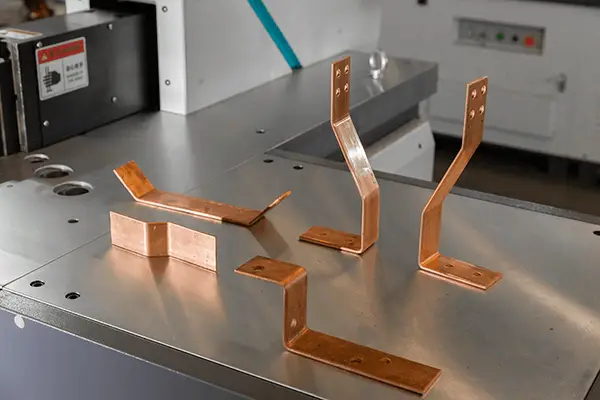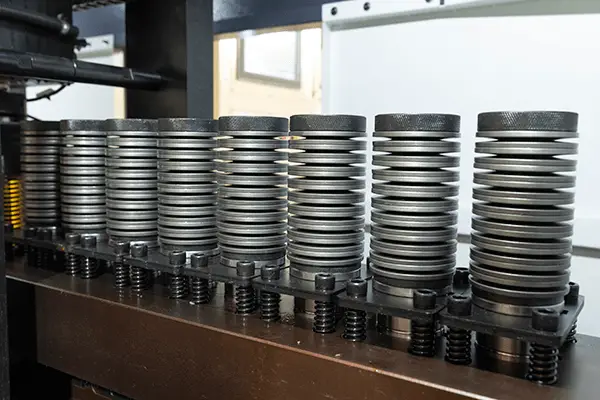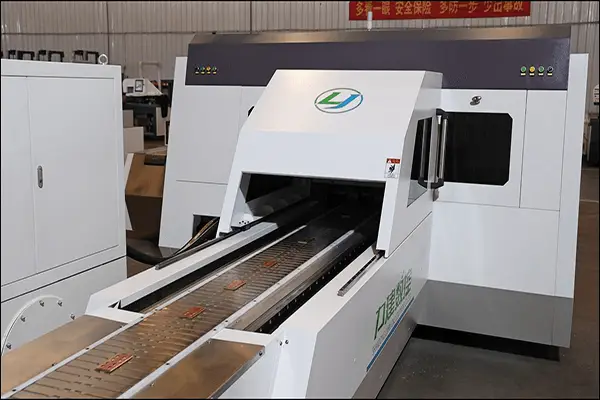
Introduction
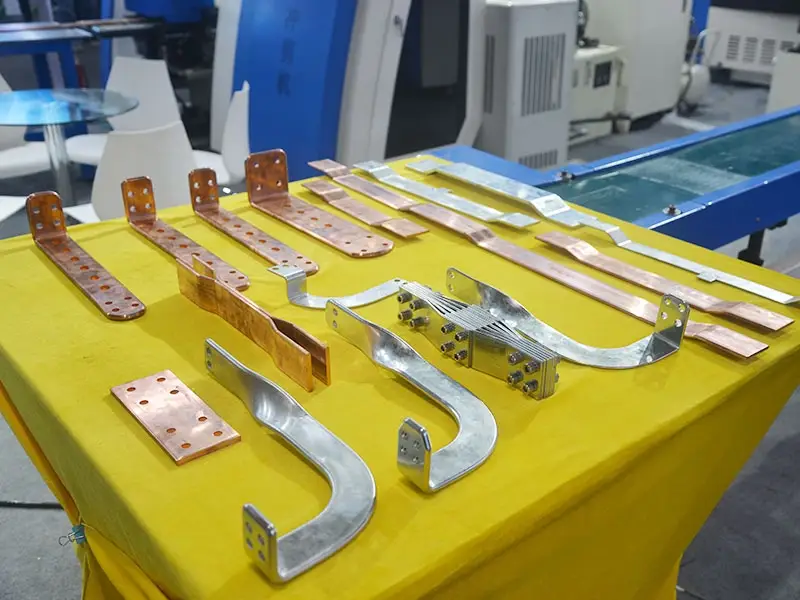
If you fabricate busbars, you frequently see “R10” or “R50” on technical drawings. But do these numbers only indicate the bend size? Actually, they carry much deeper engineering significance.
Understanding bending radius directly impacts your production quality. Selecting the wrong radius can crack expensive copper or cause cabinet assembly failures. Moreover, your CNC busbar machine must have the correct tooling and springback compensation to meet these specifications consistently.
In this guide, Shandong Lijian CNC Machinery Co., Ltd. explains exactly what R10, R20, R50, and R80 mean, why they matter for switchgear manufacturing, and how to choose the right bending tools.
1. What Does “R” Mean in Busbar Engineering?
On any mechanical drawing, “R” stands for Radius. Specifically, it defines the inside radius of a bent busbar—the distance from the imaginary center of the arc to the inner surface of the bend.
For example:
- R10 means the inside bend radius equals 10 mm
- R20 = 20 mm inside radius
- R50 = 50 mm inside radius
- R80 = 80 mm inside radius
Why does this distinction matter?
If the required radius is too small for your material thickness, the copper or aluminum will crack during bending. Conversely, if the radius is too large, the busbar may not fit into the confined space of an electrical cabinet. Therefore, matching the drawing’s R-value precisely is essential.
2. R10, R20, R50, R80: What Do These Specific Values Indicate?
These four values represent the most common standardized radii in low-voltage and medium-voltage switchgear drawings. However, engineers do not select them arbitrarily.
2.1 R10 – Compact Panel Designs
R10 typically appears on thin copper bars (3–5 mm thick). Designers choose this tight radius when space inside the panel is extremely limited. Consequently, bending requires high force and precision.
2.2 R20 – The Universal Standard
R20 is the most frequently specified radius for 5–8 mm thick busbars. It offers an excellent balance between mechanical strength and space efficiency. Therefore, most standard bending tool sets include R20 as a default.
2.3 R50 – Heavy-Duty Applications
You will find R50 on thick bars (10 mm and above) and high-current applications. A larger radius distributes mechanical stress and electrical fields more evenly, reducing the risk of fatigue or partial discharge.
2.4 R80 – Special Transformers & Extreme Arcs
R80 serves heavy transformers and specialized busway systems. Although less common, it becomes necessary when the busbar must clear large obstacles or meet strict electrical clearance requirements.
Key Insight for Fabricators:
These radii directly correspond to available punch and die sizes on standard CNC busbar machines. If your equipment lacks the correct bending tool, you simply cannot produce the required R-value.
3. Why Does the Bending Radius Matter So Much?
Three critical factors make bending radius a top priority for engineers and production managers.
3.1 Material Integrity: Avoiding Cracks
Every metal has a minimum bend ratio. For copper, industry practice recommends:
- Inside radius ≥ 1.2 × material thickness
If the drawing specifies R10 for 10 mm copper, this ratio is only 1.0—very aggressive. Such a tight bend demands premium tool steel and precise CNC control. For aluminum, you need even larger radii; otherwise, cracking is almost certain.
3.2 Springback Compensation: Achieving Accurate Angles
Copper naturally “springs back” after bending. For instance, a busbar bent to 90° using an R20 punch may actually measure 90.8° after release.
LiJian® CNC busbar machines solve this with automatic springback compensation. Our control system stores correction values for each radius and material thickness, so your first piece matches the drawing perfectly.
3.3 Insulation & Creepage Distance
In medium-voltage and high-voltage applications, sharp bends concentrate electrical stress. Larger radii like R50 or R80 distribute the electric field more uniformly. Furthermore, they provide longer surface path length (creepage distance), which helps meet international insulation standards.
4. How to Choose the Correct Bending Radius Tooling?
Your tooling selection must align with both your drawings and your machine’s capabilities.
General Guidelines:
- For 80% of daily panel production, R10 and R20 tooling will suffice.
- For copper thickness ≥10 mm, select R30, R50, or custom radii to prevent fracture.
- For aluminum busbars, always use a radius at least 1.5× thickness—never copy copper settings directly.
The LiJian® Advantage:
Our 3-in-1 CNC busbar machines feature quick-change bending tool sets covering R0, R5, R10, R20, R30, R50, R80, and custom profiles. Moreover, the CNC system automatically applies springback compensation for each specific radius and material combination, ensuring consistent output.
5. Common Questions from Busbar Fabricators
5.1 Can we bend 10 mm thick copper to R10?
Yes, but this approaches the forming limit. It requires maximum machine tonnage and high-quality tool steel. For consistent daily production, we recommend R15 or R20 for 10 mm thickness.
5.2 Does the radius affect flat length calculation?
Absolutely. The bend deduction changes with the radius. Fortunately, LiJian® CNC software calculates this automatically—no manual formulas needed.
5.3 What if the drawing says “R” without a number?
This usually indicates a sharp corner (near zero radius). However, you cannot achieve this through bending alone for thick copper; you must machine or mill the corner.
6. Why Trust LiJian® for Precision Radius Bending?
Shandong Lijian CNC Machinery Co., Ltd. has focused exclusively on busbar fabrication equipment since 2005. Our engineering team—over 40% possess 10+ years of industry experience—designs every machine to solve real shop-floor challenges.
What distinguishes LiJian®:
- Servo-controlled bend axis delivers ±0.1 mm positioning accuracy, essential for repeatable R10 and R20 quality.
- Extensive material library stores pre-programmed springback data for copper, aluminum, and tinned bars.
- CE-certified manufacturing guarantees international safety and performance standards.
- 24/7 global support helps you select tooling and optimize programs, regardless of your time zone.
7. Final Summary: R Values Speak the Language of Production
When you encounter R10, R20, R50, or R80 on a drawing, you are reading the design engineer’s explicit requirements for fit, function, and electrical safety.
Consistently meeting these radius specifications—order after order—separates top-tier switchgear manufacturers from the rest. It demands the right machine, the correct tooling, and intelligent CNC software.
Need help selecting the optimal bending tool package for your production mix?
Contact LiJian® today. Our application engineers will review your typical drawings and recommend the ideal 3-in-1 busbar machine configuration.
📧 info@lijianbusbarmachine.com
🌐 www.lijianbusbarmachine.com